
And Why It Matters for Your Home
When homeowners embark on a renovation or a new build, the first professional they often think to hire is an interior designer. But many don’t realise there’s a deeper, more technical layer that determines whether a home truly works: interior architecture. As an MSc Architect, I see a home not just as a collection of rooms to be furnished, but as a living system of light, circulation, and structural integrity.
Here is why understanding the “architecture” of your interior is the difference between a house that looks good and a home that feels effortless.
It’s About the “Bones,” Not Just the Skin
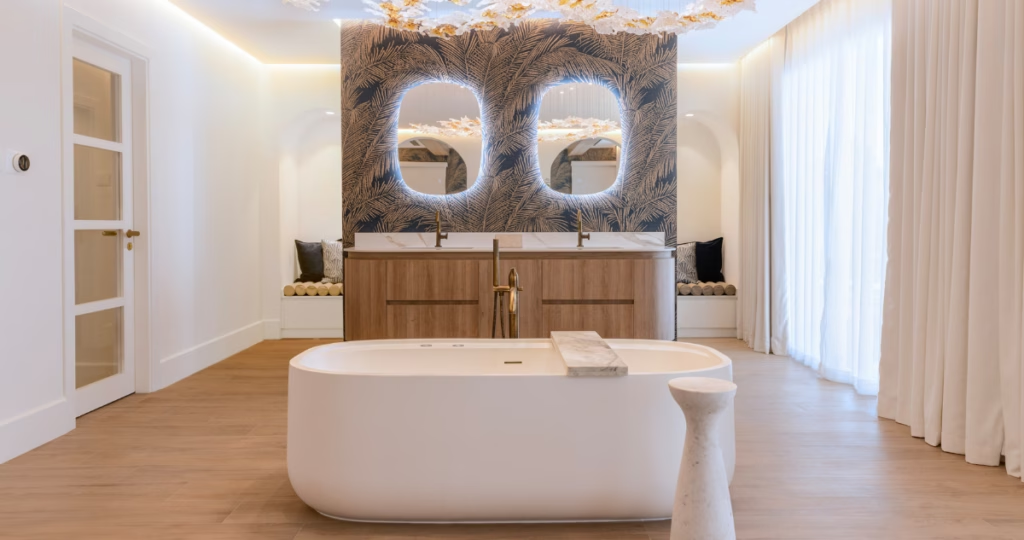
While a decorator focuses on the “skin” of a room (the fabrics, the color palettes, and the furniture) Interior Architecture focuses on the bones. It is the bridge between the raw shell of a building and the final decorative touches.
Interior architecture involves:
- Spatial Reconfiguration: Moving or removing walls to improve the flow of daily life.
- Structural Integrity: Understanding which changes are technically feasible without compromising the building’s safety.
- Joinery & Built-ins: Designing custom architectural elements that feel like part of the house, not just additions to it.
The Science of Human Flow: Designing the “Voids”
Have you ever been in a room filled with beautiful, expensive furniture that still felt “awkward” or cramped? That is usually a failure of spatial planning.
In my practice, I often ask a client one fundamental question: “How do you use the room?”
The answer tells me where the “solids” (the walls, the cabinetry, the sofa) need to go, but more importantly, it tells me where the “voids” must be.
What is a “Void”?
Think of a coffee cup. The ceramic is the “solid,” but the empty space inside is the “void.” Without that empty space, the cup is just a useless block of clay. The void is the part you actually use.
In your home, “designing the void” means:
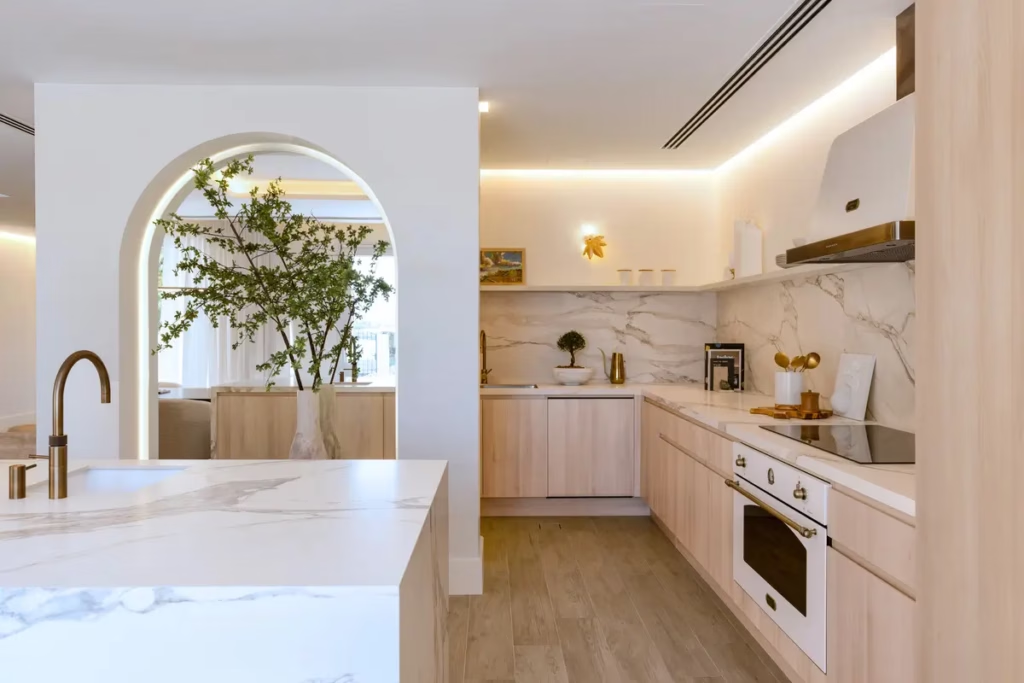
- Breathing Room: Ensuring there is enough physical space between a marble island and a wall so you never feel trapped while cooking.
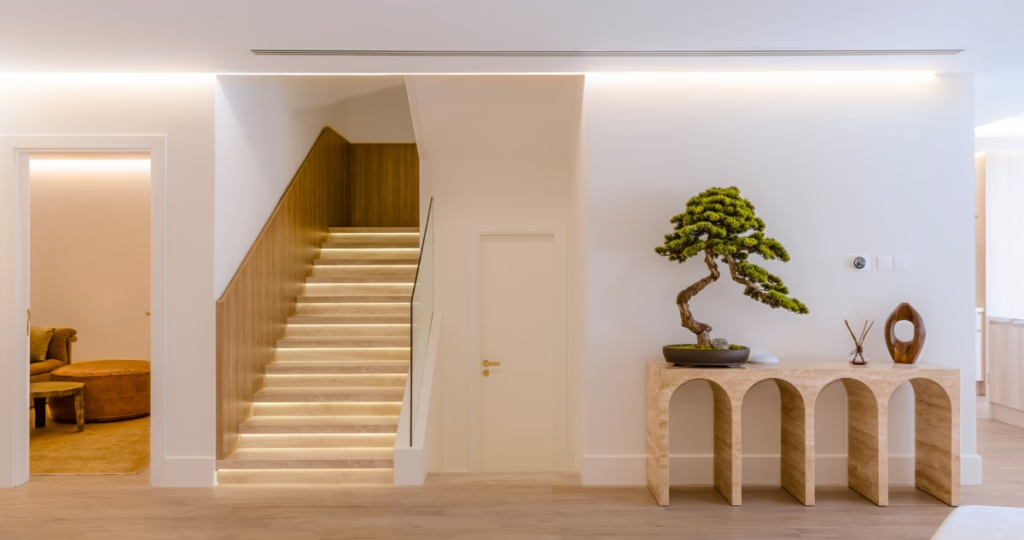
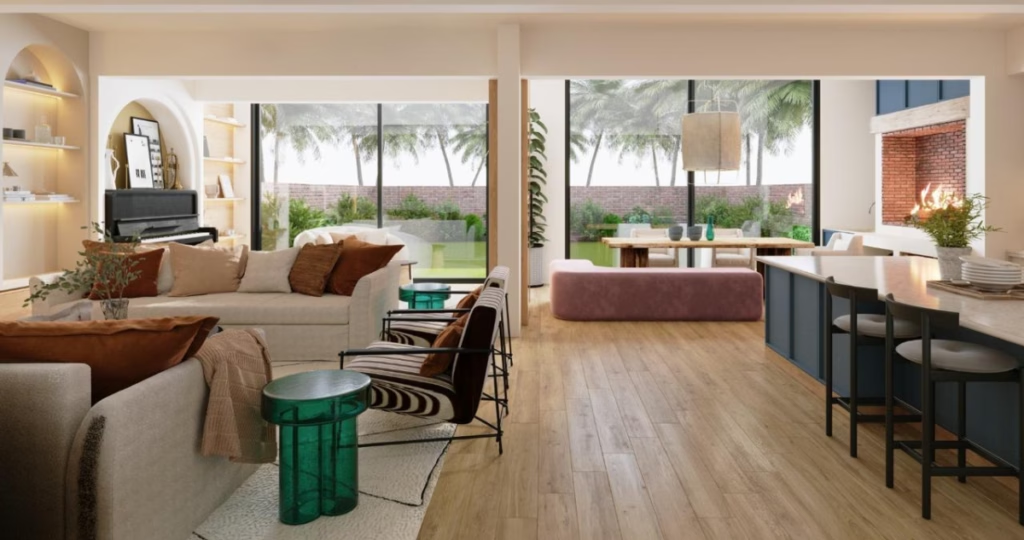
- Sightlines: Creating “empty” lines of vision that allow you to stand in the foyer and see all the way through to the garden. This “nothingness” is exactly what makes a home feel expansive and high-end.
- Intuitive Movement: Mapping out “circulation paths” so that moving from the kitchen to the living area feels like a natural flow rather than a series of obstacles.
By focusing on the space between the objects, we use the Psychology of Space to create a home that feels peaceful, organised, and intentionally built for your specific lifestyle.
Why This Matters for Your Investment
As an MSc Architect, I don’t just decorate your home; I optimize its DNA. While trends in colors and fabrics will inevitably shift, a home with perfect architectural “bones” and thoughtful “voids” will remain timeless.
A well-architected interior doesn’t just look like a magazine cover. It will function like a well-oiled machine, increasing both your daily quality of life and the long-term value of your property.
Lighting as a Structural Element
To most, lighting is an afterthought, a beautiful chandelier or a trendy floor lamp. But to an architect, lighting is a structural material, just like marble or wood. In a high-end home, we don’t just “add lights”; we design the interior shell to manipulate it.
The Architecture of Light
Because I look at your home through an engineering lens, I consider how light interacts with the building’s orientation. We ask:
- Natural Light Harvesting: How does the sun enter your living room at 10:00 AM versus 4:00 PM? We design the “voids” and window placements to capture that gold-standard natural light.
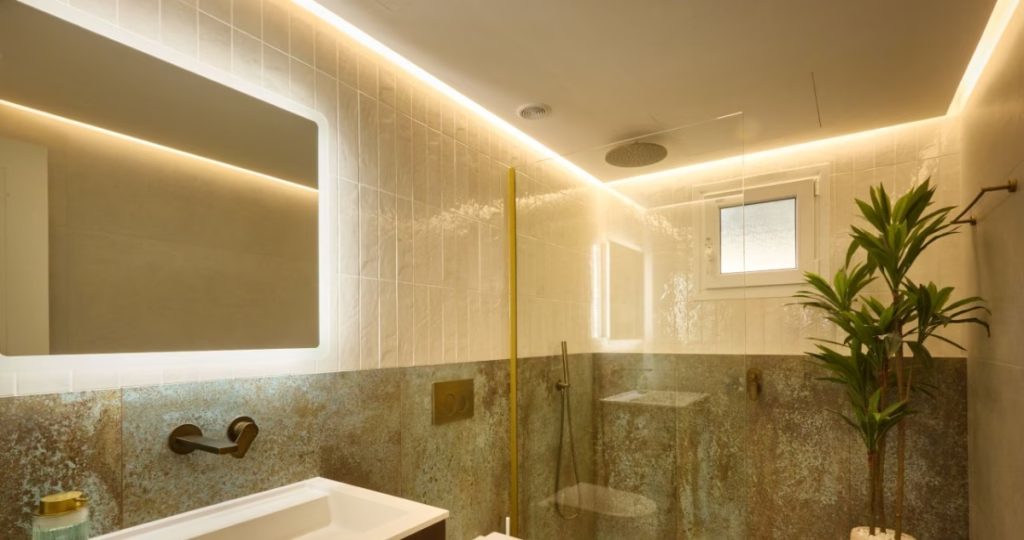
- Integrated Illumination: We integrate “invisible” lighting into the very fabric of the house—coves, joinery, and recessed architectural channels. This creates a glow that feels like it’s coming from the walls themselves, rather than a bulb.
- Circadian Rhythm Design: In 2026, luxury is health. We design lighting systems that shift in temperature and intensity throughout the day, supporting your body’s natural clock and enhancing your mood.
Investing in Longevity: Beyond the “Makeover”
In the world of luxury design, furniture and decor are “movable assets.” They can be replaced as seasons change. Interior Architecture, however, is an investment in the permanent soul of your home.
When we focus on the architectural foundation, we are creating a space that doesn’t just look “current”: it feels intentional.
Integrated Living Systems
Because I look at your home through an engineering lens, I ensure that the complex systems that make a home comfortable are “invisible” but high-performing.
- Seamless Technology: Instead of bulky units or messy wiring being an afterthought, we integrate HVAC, acoustic dampening, and smart-home hubs into the very fabric of the walls and joinery.
- Harmonious Transitions: We don’t just put a door between your living room and the garden; we design a transition that blurs the line between the two. It’s about creating a sense of infinite space, where your interior feels like a natural extension of the landscape.
The Luxury of “Correct”
There is a specific kind of peace that comes from a home where everything is “correct.”
- It’s the way a door handle feels when it meets the frame.
- It’s the way the light hits a recessed cove at sunset.
- It’s the fact that you never feel “stuck” in a corner because the circulation paths were mapped to your specific movements.
A “makeover” is a temporary fix. Interior Architecture is a permanent evolution of your environment. By prioritising the “bones” and the “voids” now, you ensure that your home remains a sanctuary that functions perfectly for your lifestyle, long after the latest design fads have faded.
So, What is Interior Architecture?
If Interior Design is the wardrobe of a home, Interior Architecture is the DNA. It is the invisible intelligence that makes a luxury space feel effortless rather than just decorated.
To help you distinguish between the two, remember these three pillars of the Tünde Hendricks approach:
| The “What” | The Architectural Difference |
| The Solids | We don’t just place furniture; we engineer the walls, joinery, and structural features that define the room’s character. |
| The Voids | We design the “nothingness”—the empty spaces and sightlines that allow for light, movement, and a sense of calm. |
| The Flow | We ask, “How do you use the room?” to map out intuitive paths so your daily life feels frictionless. |
The Tünde Hendricks Difference
At Tünde Hendricks Design, we don’t start with a mood board; we start with a technical analysis.
My background in architecture allows us to push boundaries, creating spaces that breathe and structures that endure. When you understand what interior architecture means, you realise you aren’t just paying for a beautiful room; you are investing in a masterpiece of engineering that elevates how you live every single day.
Your home deserves more than a makeover.
It deserves a foundation of excellence.
FAQs
Interior design focuses mainly on the decorative elements of a space, such as colour schemes, furniture, textiles, and styling. Interior architecture goes deeper by addressing the structural layout and functionality of a home. It involves spatial planning, reconfiguring walls, designing built-in features, and ensuring the structure, lighting, and circulation of the space work seamlessly together.
Spatial planning ensures a home functions comfortably and efficiently. By carefully designing circulation paths, sightlines, and the spacing between furniture and architectural elements, interior architecture creates rooms that feel open, balanced, and easy to move through. Good spatial planning prevents spaces from feeling cramped or awkward, even when they are beautifully decorated.
Lighting is considered a structural element in interior architecture rather than just a decorative feature. Architects analyse how natural light enters a home throughout the day and design spaces to maximise it. They also integrate lighting into architectural elements such as ceilings, joinery, and wall recesses to create a layered, natural glow that enhances both comfort and functionality.
Yes. While furniture and décor can change over time, interior architecture shapes the permanent structure and functionality of a home. Thoughtful spatial design, integrated lighting, and well-engineered layouts can improve daily living, increase property value, and ensure the home remains timeless and practical long after design trends evolve.
