
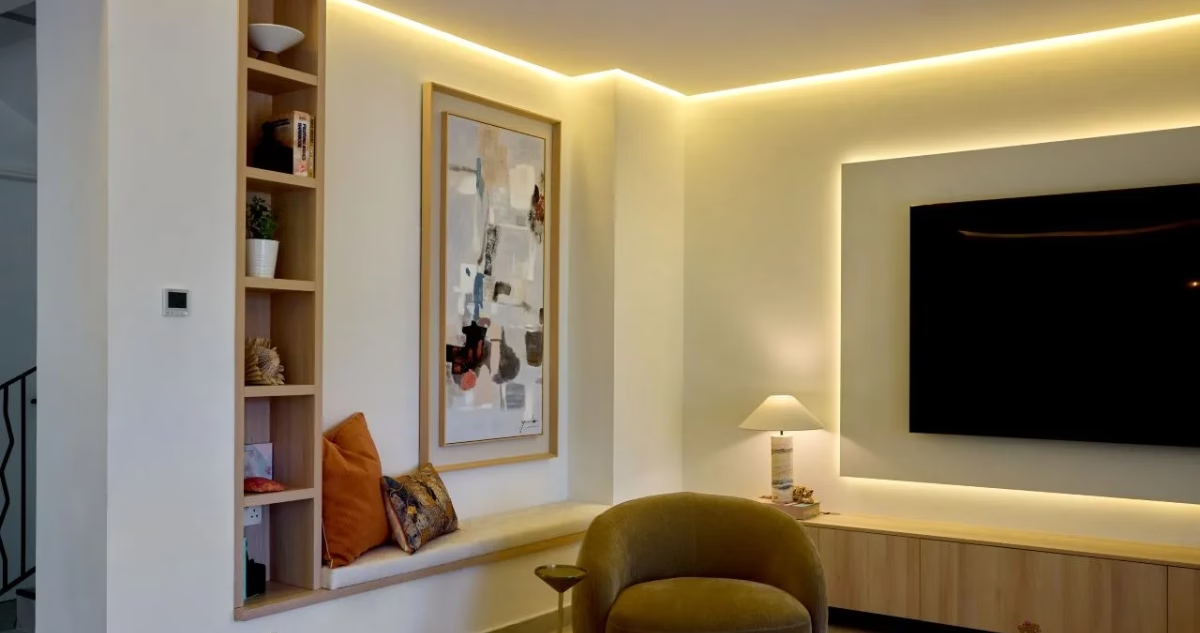
We often speak on our socials, website, and portfolio about bespoke joinery, and for good reason. When you step into a space that feels effortlessly elegant, it is rarely due to the loose furniture alone. Instead, it is the invisible intelligence woven into the structure itself.
It is the perfect alignment of a floor-to-ceiling library wall, a wardrobe that transitions seamlessly into a structural column, or an integrated media unit that perfectly balances open art display with hidden storage.
In interior architecture, bespoke joinery isn’t a decorative afterthought or an exclusive luxury item. It is an essential design solution that we bring to every single project we do. If loose furniture provides the solo notes of an instrument, joinery is the underlying score that holds the orchestra together.
This is the magic of bespoke joinery.
What Exactly is Bespoke Joinery?
At its simplest, joinery refers to the wooden fixtures and structural elements that connect parts of a building. Think cabinets, doors, stairs, and shelving. However, when we introduce the word bespoke, the entire concept is elevated.
Bespoke joinery means every single piece is uniquely designed and engineered to fit the exact dimensions, angles, and architectural “bones” of your specific home. Unlike mass-produced, off-the-shelf furniture that requires your room to adapt to its limitations, bespoke joinery reverses the equation. It is custom-built to honor the flow, light, and volume of your space.
While custom joinery serves as the functional backbone of all our layouts, the luxury angle is defined by the materials we choose to layer onto it. Investing in custom joinery transforms a property from standard to extraordinary.
Why Bespoke Joinery is Essential for the Modern Home
Investing in custom joinery transforms a property from standard to extraordinary. Here is why it plays such a critical role in high-end spatial design:
Flawless Spatial Optimisation
Every home features architectural idiosyncrasies. It could be an awkward alcove, an unutilised under-stairs void, or challenging ceiling heights. Bespoke joinery maximises every single millimetre. It turns structural challenges into breathtaking focal points. It can also ensure that storage is integrated seamlessly without cluttering the visual flow of the room.
The Invisible Integration of Technology
True modern luxury is often defined by what remains unseen. Bespoke joinery allows us to design out the visual clutter of essential home infrastructure. Complex audio-visual cabling and smart-home hubs disappear entirely into custom cabinetry.
Everything is detailed with intent.
A Statement of Identity and Longevity
Your home should be a reflection of your private journey, not a replica of a showroom catalogue. Custom joinery grants limitless creative freedom. You can pair rich walnut with honed travertine or hand-patinated metal. Built from superior materials to endure for decades, it is a smart investment that enhances your daily living while boosting your property’s value.
Bespoke Joinery in Practice: Room by Room
To understand how custom joinery elevates daily living, we must look at how it transforms the individual rooms within your home. It goes far beyond standard wardrobes and kitchen cabinets; it dictates how you interact with your environment.
The Master Suite & Dressing Room
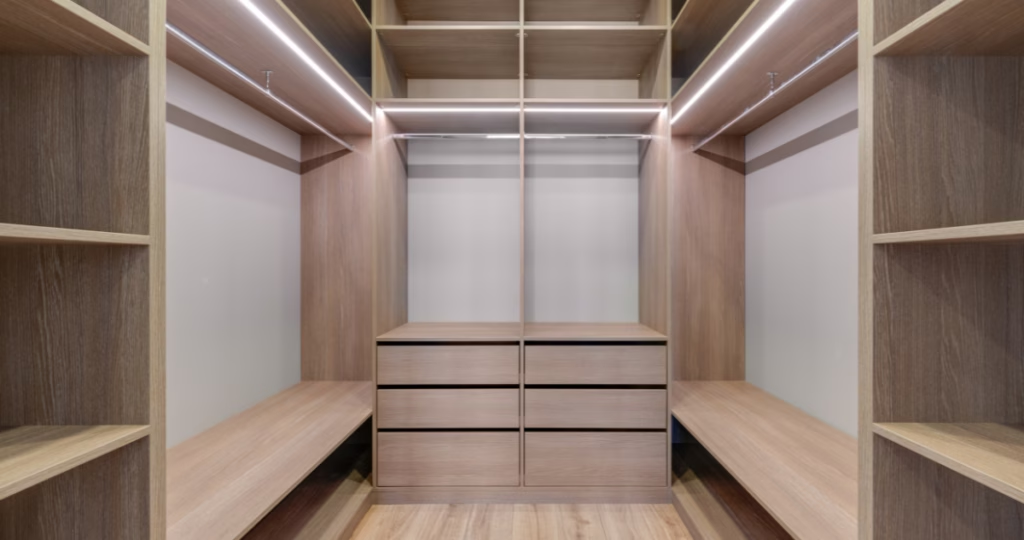
A dressing room should evoke the calm, curated atmosphere of a high-end boutique. Off-the-shelf wardrobes leave awkward, dust-collecting gaps at the ceiling line and fail to adapt to how you actually live.
Bespoke dressing rooms, however, are built into the fabric of the walls. Instead of forcing your lifestyle into rigid, pre-made dimensions, bespoke dressing rooms are built directly into the fabric of your home. We can engineer them around your specific routine. For example:
- Incorporating velvet-lined accessory drawers that open at a touch
- Integrated watch-winders
- Internal LED lighting that accurately renders the colours of your wardrobe.
The Living & Entertaining Spaces
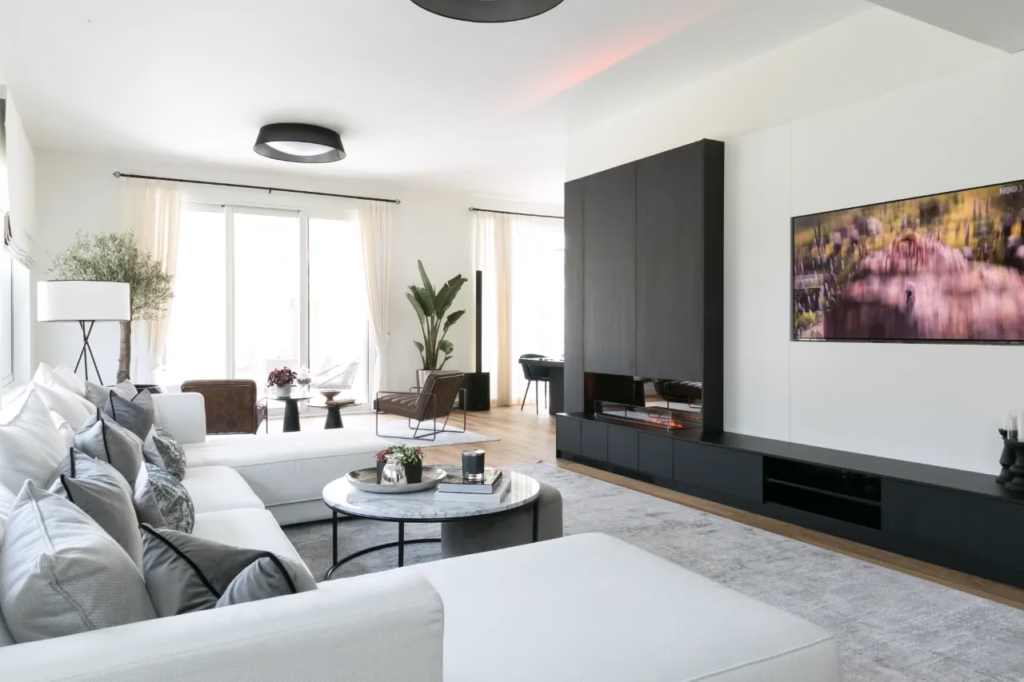
The modern living room must balance relaxation with state-of-the-art entertainment. Yet a large television screen can easily dominate a room’s aesthetic. Through bespoke joinery, we can design elegant media installations and bookshelves, featuring for example:
- Automated pocket doors or sliding artwork panels that completely conceal the screen when not in use.
- Bookcases can be designed with variable shelf depths to accommodate specific art collections, with subtle back-lighting to give the objects three-dimensional depth.
The Kitchen & Dining Anchors
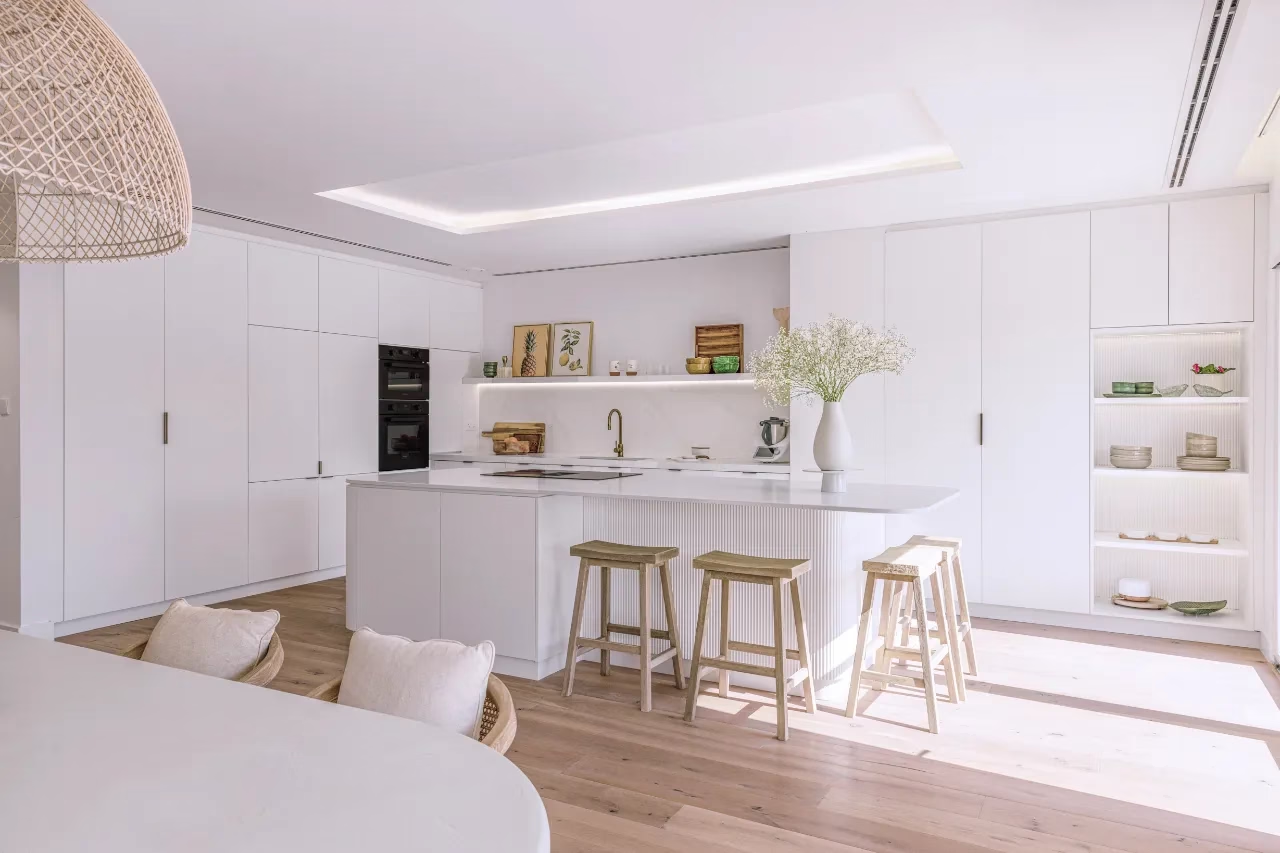
As the heart of the home, the kitchen demands the highest level of structural resilience. Bespoke joinery allows us to create:
- Fully integrated appliance walls that wrap refrigerators and wine towers in matching premium timber, maintaining a continuous, uninterrupted design flow.
- Hidden walk-in pantries (or “butler kitchens”) concealed behind what looks like a seamless wall panel.
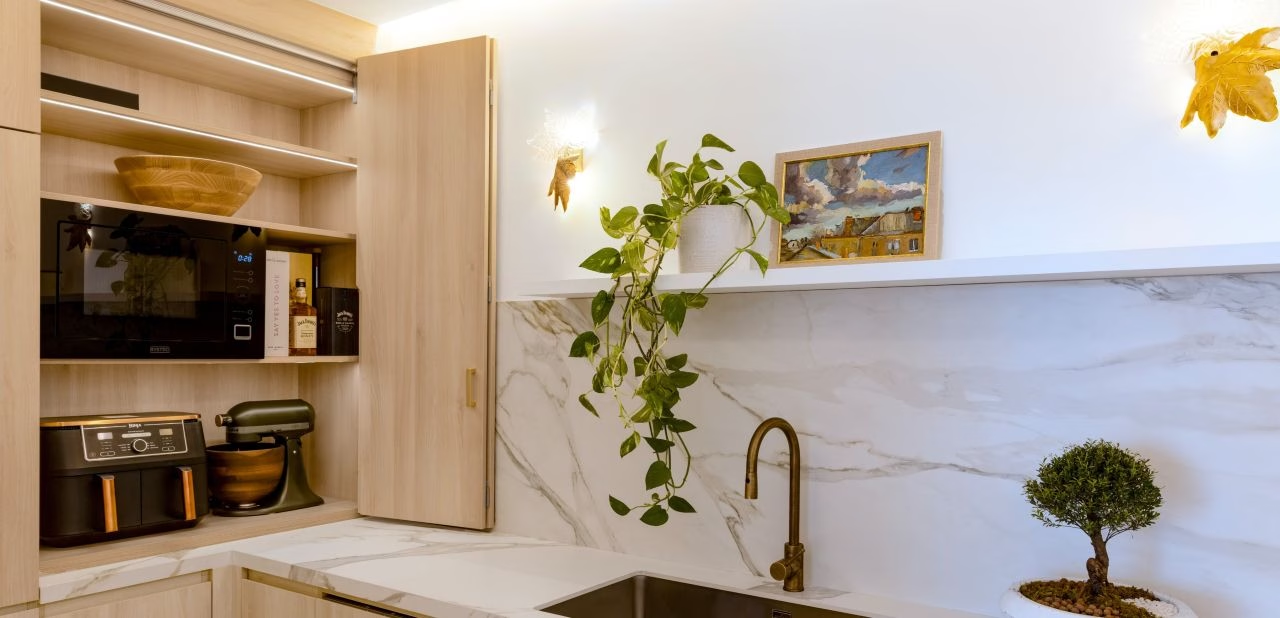
- Retractable breakfast stations with pocket doors that elegantly tuck away coffee bars and small appliances, keeping your main workspaces entirely clutter-free.
The Art of the Review: The Design Process Behind the Scenes
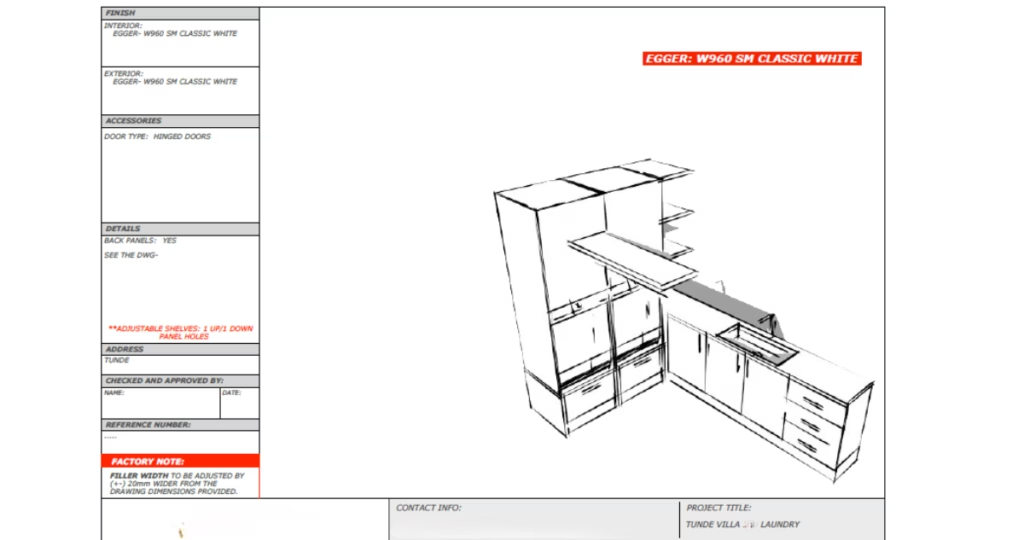
What separates amateur cabinetry from architectural joinery is the rigorous engineering happening behind the beautiful facade, a rigorous alignment between design intent and physical production. Because we utilise highly stable engineered materials—such as premium, long-lasting German Egger boards for durable internal structures and advanced veneers for external faces—we eliminate the warping and cracking risks associated with traditional solid wood.
Our studio approaches the technical execution with a specific, streamlined process. We don’t draft the final workshop construction drawings ourselves; we leave that to the specialist master joiners who manufacture the pieces. However, we, at Tünde Hendricks Design, rigorously review and refine these production drawings. This ensures that material transitions are micro-millimeter precise, flush alignments are perfect, and the original design vision is executed flawlessly without compromise.
Beyond Timber: The Material Layering of “Quiet Luxury”
While joinery forms the structural foundation, the transition into true high-end design happens through material layering. Modern luxury is defined by disciplined restraint, focusing less on superficial opulence and more on honest materials that prioritise meaning and longevity.
We use durable, high-performance engineered boards as our structural canvas, then embellish them with sophisticated material pairings to create a sense of unified calm:
- Honed Natural Stone: Integrating slabs of Calacatta marble, quartzite, or travertine directly into the joinery as backdrops for bars, vanity tops, or recessed shelving display niches.
- Powder-Coated Metals: Incorporating high-quality, powder-coated metal elements for custom tracks, slim handles, and delicate framing details that offer superior longevity and a crisp, clean finish.
- Specialised Glass & Mirrors: Using fluted, ribbed, or smoked glass panels paired with antique mirror backings to catch the ambient light and add depth to cocktail cabinets and walk-in wardrobes.
- Tactile Upholstery: Lining the back of display niches or the interiors of drawers with premium suede, leather, or woven linen, softening the acoustic qualities of the room while introducing unexpected tactile luxury.
Did you know?
In the UAE market, several joinery companies offer up to a 10-year warranty on custom kitchen designs. However, a warranty is only as good as the hands that build it. Tünde Hendricks Design exclusively partners with vetted, highly reliable local artisans, guaranteeing flawless execution and long-term peace of mind.
How Tünde Hendricks Design Delivers the Difference
Designing custom joinery requires a rare blend of artistic vision and rigorous technical precision. A beautiful sketch is nothing without structural viability. This is where our unique, architect-led approach sets us apart.
- The Architect-Engineer Precision: Led by MSc Architect-Engineer Tünde Hendricks-Szalai, our studio designs around how you actually live. We balance aesthetic vision with structural calculation. We analyse weight distribution, managing timber movement, and ensuring every custom installation respects your building’s integrity.
- Holistic Material Curation: We look beyond basic cabinetry. We meticulously curate material palettes that weave your joinery into the wider room, integrating stone, specialised glass, and upholstered panels to establish a sense of unified, timeless “quiet luxury.”
- The Client-Centric Vision: Your home should be an authentic reflection of your personal narrative, not a replica of a showroom catalogue. We design with deep empathy for your lifestyle, taking the time to truly understand your daily rituals, storage habits, and how you move through your space. This collaborative approach ensures the final design is perfectly tailored to your life.
- Concept to Completion Oversight: Navigating the journey from a 3D visualisation to a flawless physical installation can be overwhelming. We manage the entire process for you. We collaborate directly with master craftsmen, handle the technical drawings, oversee the fit-out on-site, and manage the quality control so that the final handover is entirely stress-free.
Elevate the Bones of Your Space
Bespoke joinery is the ultimate expression of intentional living. It ensures your home functions like a well-oiled machine while looking like a curated masterpiece. Are you looking to reimagine your space with custom elements designed exclusively for your lifestyle?
Frequently Asked Questions
While custom furniture usually refers to standalone, loose items made to specific sizes (like a dining table), bespoke joinery is structurally integrated into the interior architecture of the building. It is engineered to fit the exact, physical “bones” of your property—such as floor-to-ceiling libraries, flush wall panels, or under-stairs storage—becoming a permanent part of the home’s layout.
Solid wood is highly sensitive to changes in humidity and temperature, making it prone to warping, twisting, and cracking over time—especially in climate-controlled modern homes or regional climates like the UAE. We use high-performance, premium German engineered boards for the internal casing because they offer absolute structural stability, ensuring doors and drawers remain micro-millimeter precise for decades. We then layer exquisite natural wood veneers, stones, and metals on the exterior faces.
Because our process involves deep architectural calculation, master artisan collaboration, and rigorous drawing reviews, a typical premium joinery project takes anywhere from 2 to 12 weeks. This includes the initial conceptual design, material curation, technical production drawing reviews with our craftsmen, workshop fabrication, and final on-site installation.des.
Yes, significantly. High-end buyers prioritise seamless storage, hidden smart-home infrastructure, and spatial optimisation. Bespoke joinery transforms awkward architectural anomalies into functional art, maximising usable square footage and giving a property the unmistakable hallmark of “quiet luxury” that commands a premium in the real estate market.
