
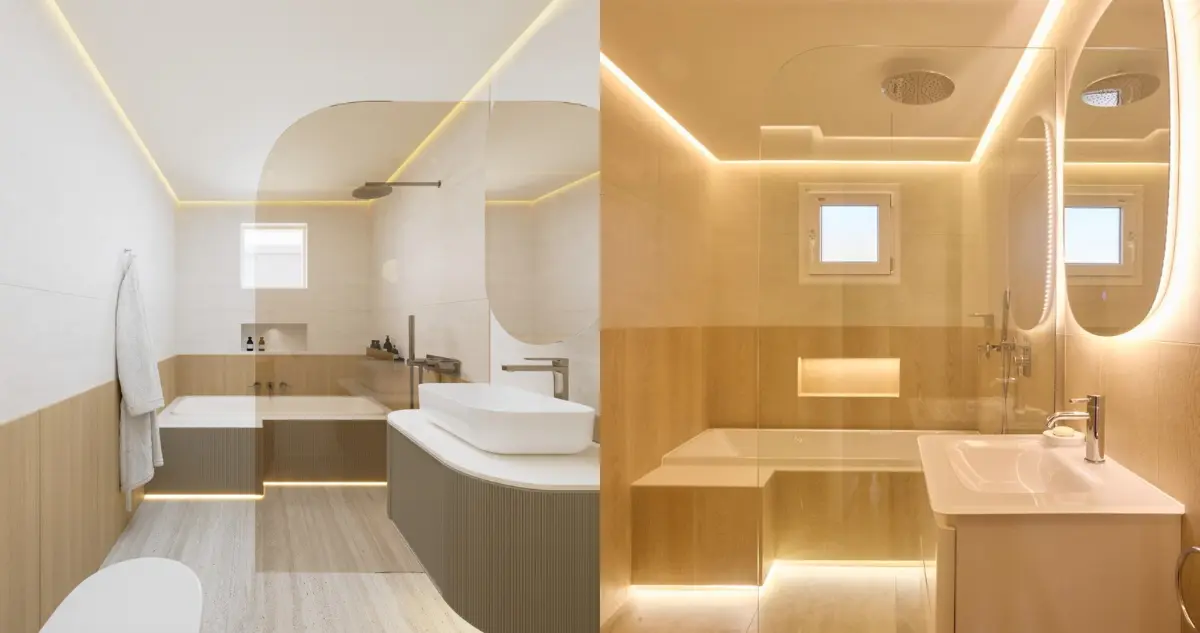
In an age where technology can generate a photorealistic living room in seconds, a question often surfaces during our initial consultations: “Can I just use AI to design my home?”
It is a valid question. AI tools like Midjourney or Dall-E are spectacular at dreaming. They can blend colours, suggest layouts, and offer a thousand iterations of a “modern coastal villa” before you’ve even finished your morning coffee.
But as an architect-led studio, we believe there is a fundamental difference between a picture of a room and a home that works. While AI is a welcome guest in the design process, it isn’t ready to take the keys just yet.
Here is why your interior designer remains your most important collaborator.
AI models in 3D; we build in reality.
An AI-generated image doesn’t know where your electrical points are, how the afternoon sun hits your specific plot in Al Hamra, or if a particular sofa can actually fit through your doorway.
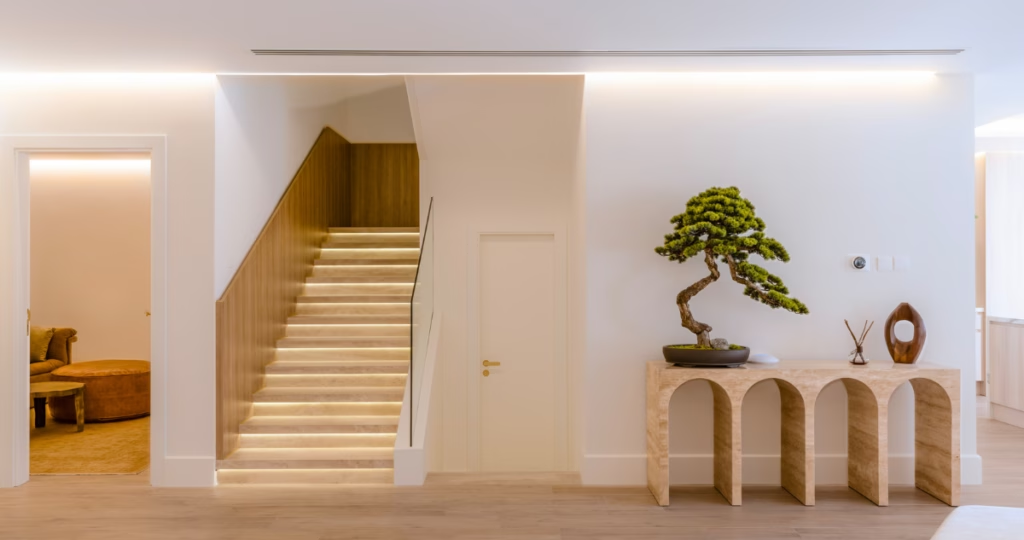
At Tünde Hendricks Design, our approach is rooted in structural engineering and architectural precision. We don’t just “decorate”; we plan the flow, the lighting, and the materiality. AI can show you a beautiful staircase, but it cannot ensure that staircase is structurally sound or ergonomically comfortable for your family.
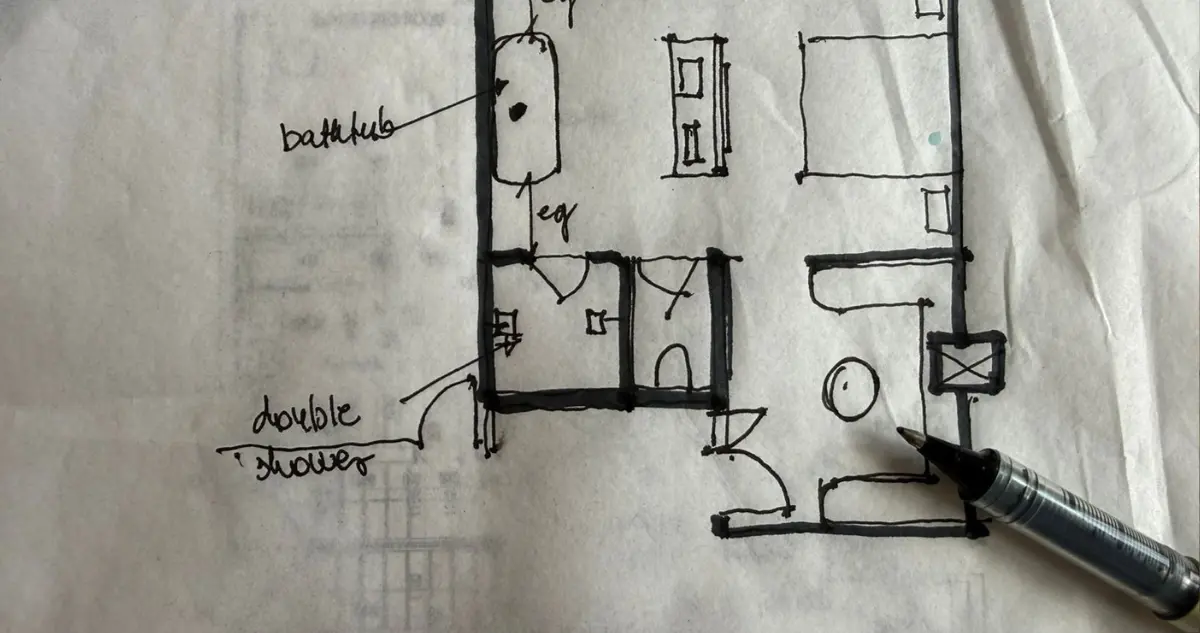
The “Love Object” and Emotional Intelligence
Design is deeply emotional. In our recent projects, we’ve often started not with a mood board, but with a “love piece”—a hand-knotted tapestry, a family heirloom, or a piece of art collected on travels.
AI works by averaging existing data; it looks at what has already been done and gives you a version of it. It cannot “read between the lines” of your life. It doesn’t understand the nostalgia of a certain texture or how to build an entire room around a memory. A house becomes a home only when it reflects the soul of the person living in it. This is something an algorithm cannot yet feel.
Did you know?
The term “Neuroaesthetics” explains how our brains respond to our physical environment. While AI can create a “pretty” image, a professional designer uses principles of light, ceiling height, and natural materials to actually lower your cortisol levels and improve your well-being. Good design isn’t just about how a room looks; it’s about how it makes you feel.
The Reality of the “Turnkey” Experience
The most beautiful design in the world is only as good as its execution. Interior design involves a symphony of moving parts: coordinating with contractors, sourcing bespoke joinery, managing timelines, and navigating UAE building codes.
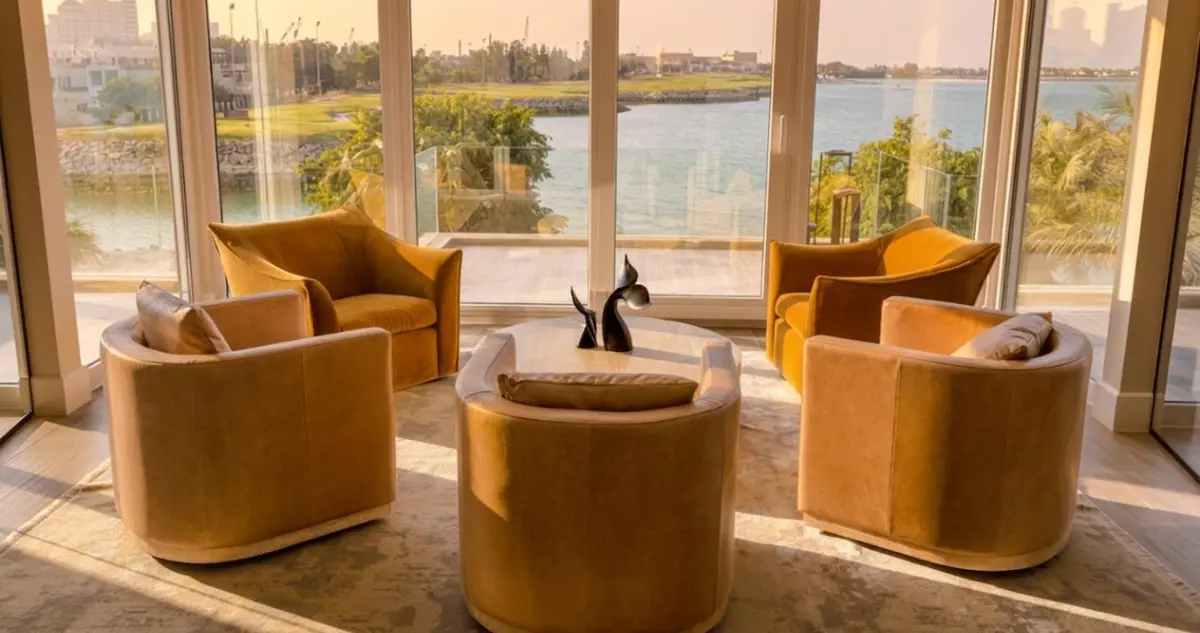
AI cannot walk onto a site and notice that a tile shade is slightly off under natural light, nor can it crouch down to decide exactly which grouting colour will make a stone floor sing. It cannot problem-solve when a supplier delivery is delayed or adjust a layout on the fly when an unexpected pipe is discovered behind a wall. Our “concept to completion” service exists because the magic happens in the physical details of the build, not just the pixels on a screen.
Planning a renovation in the UAE?
Let’s move beyond the screen and start building something meaningful. Contact Tünde Hendricks Design today to discuss your vision.
Sourcing the “Un-Googleable”
While premium suppliers have websites, AI cannot feel the grain, verify the quality, or secure the trade-exclusive allocations of the rarest materials. It can find a million options on a public database, but it cannot curate them for your home.
A designer’s “little black book” isn’t just a list of names; it’s a network of vetted artisans, trusted engineers, and priority access. We don’t just search the internet; we manage the relationships that bring elite craftsmanship into reality.
Quiet Luxury vs. Copy-Paste Trends
Because AI relies on what is currently popular on the internet, it tends to lean towards “trends.” However, true luxury is timeless. Our philosophy focuses on “Quiet Luxury”, using natural travertine, bespoke craftsmanship, and intentional layouts that won’t feel dated in five years. We aim to create spaces that are uniquely yours, not a high-speed render of what everyone else is doing.
AI is a Tool, Not a Designer
We embrace technology. We use advanced 3D visualisations and digital tools to help our clients “see” their future homes. But these tools are the brushes, not the artist.
AI can give you an idea, but a designer gives you a solution. It can give you a house that looks like a hotel, but a designer gives you a home that feels like you.
FAQs
While AI generates stunning visuals, it lacks architectural precision. AI cannot account for structural constraints, electrical layouts, or UAE building codes. A professional designer ensures that a concept is not just a beautiful image, but a buildable, safe, and functional reality.
AI functions by averaging existing internet trends, often leading to “copy-paste” aesthetics. A personal design philosophy, such as the “Quiet Luxury” approach at Tünde Hendricks Design, focuses on timelessness, bespoke craftsmanship, and your unique emotional connection to your space.
Luxury interior design in the UAE requires a “turnkey” approach. This includes managing local contractors, navigating site-specific challenges, and sourcing “un-Googleable” materials from exclusive global artisans—tasks an algorithm cannot perform.
Yes, AI is a powerful tool for initial inspiration and brainstorming. However, it serves as a “digital brush” rather than the artist. A designer takes those initial ideas and refines them into a bespoke home renovation plan that considers ergonomics, lighting, and human emotion.
